







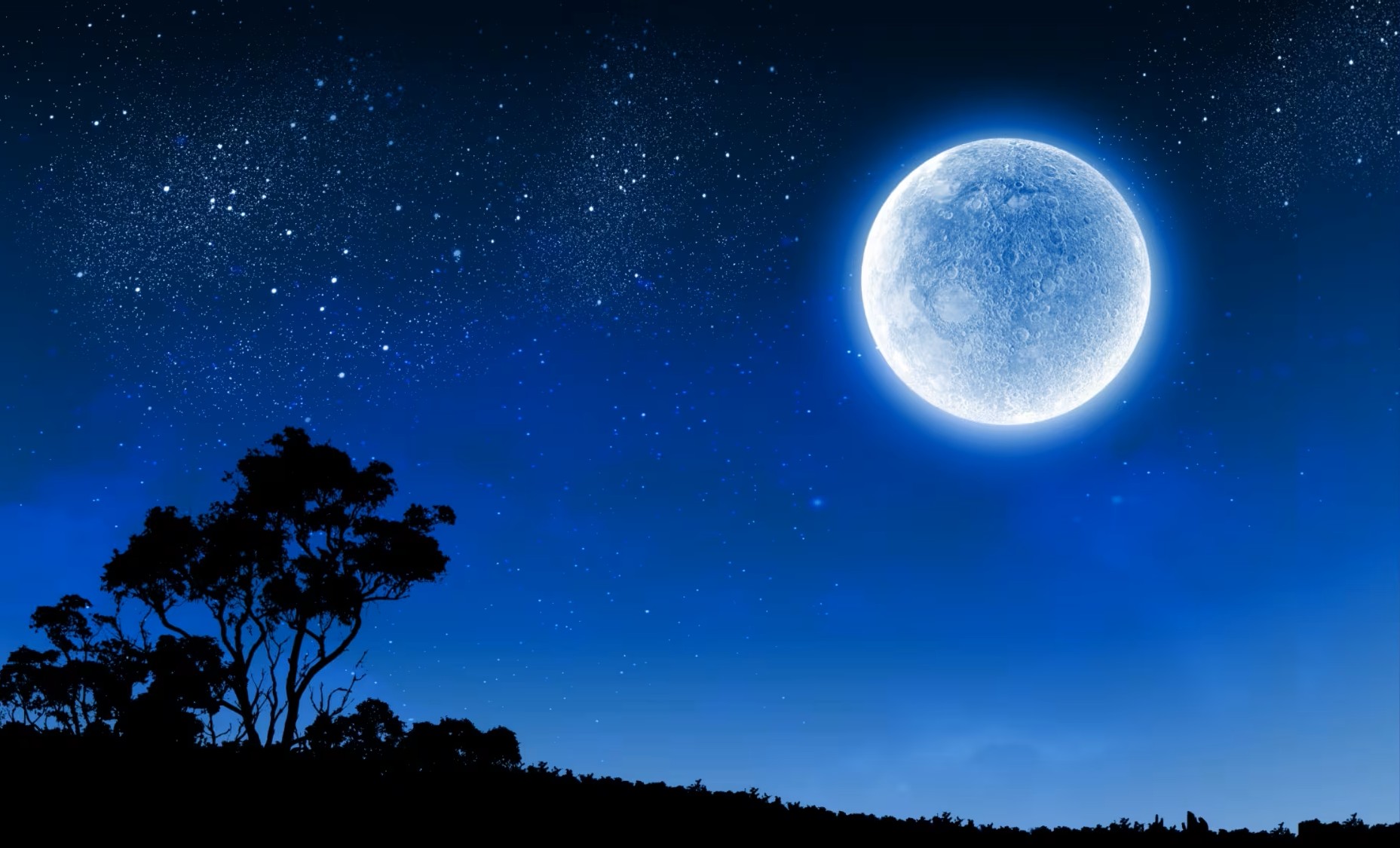
Skywatchers around the world are preparing for a rare and captivating lunar event this May as a Blue Moon appears in the night sky, offering a striking astronomical spectacle visible to millions. Despite its name, a Blue Moon does not usually appear blue in color; instead, it refers to a rare occurrence of an additional full moon within a single calendar month or season, depending on the definition used.
The upcoming Blue Moon will be visible on the night of its peak full phase, when the Moon appears fully illuminated as it rises above the horizon after sunset. Observers will be able to view it with the naked eye, provided skies are clear and light pollution is minimal. The best viewing time is typically shortly after moonrise, when the Moon appears larger and more dramatic due to its position near the horizon, creating a visual effect often referred to as the “moon illusion.”
Astronomers note that Blue Moons are relatively uncommon, occurring roughly once every two to three years in the monthly definition. This makes each appearance a notable event for both casual stargazers and astronomy enthusiasts. The phenomenon is caused by the alignment of the lunar cycle, which takes approximately 29.5 days, with the structure of our calendar months.
To get the best experience, viewers are advised to find an open area away from city lights, such as beaches, rooftops, or rural landscapes. No special equipment is required, although binoculars or a small telescope can enhance the viewing experience by revealing surface details such as craters and lunar maria.
Photography enthusiasts are also encouraged to capture the event using a tripod and a smartphone or camera with manual settings. Including foreground elements such as trees, buildings, or landmarks can help create visually striking compositions of the Moon against the night sky.
While the Blue Moon itself does not differ physically from other full moons, its rarity and cultural significance have made it a symbol of wonder across different traditions and communities. Many cultures associate full moons with change, reflection, and heightened awareness, adding to the appeal of this celestial event.
As May’s Blue Moon rises, it offers a reminder of the predictable yet ever-inspiring rhythms of our solar system, encouraging people around the world to look up and appreciate one of nature’s most accessible astronomical displays.









+ There are no comments
Add yours