






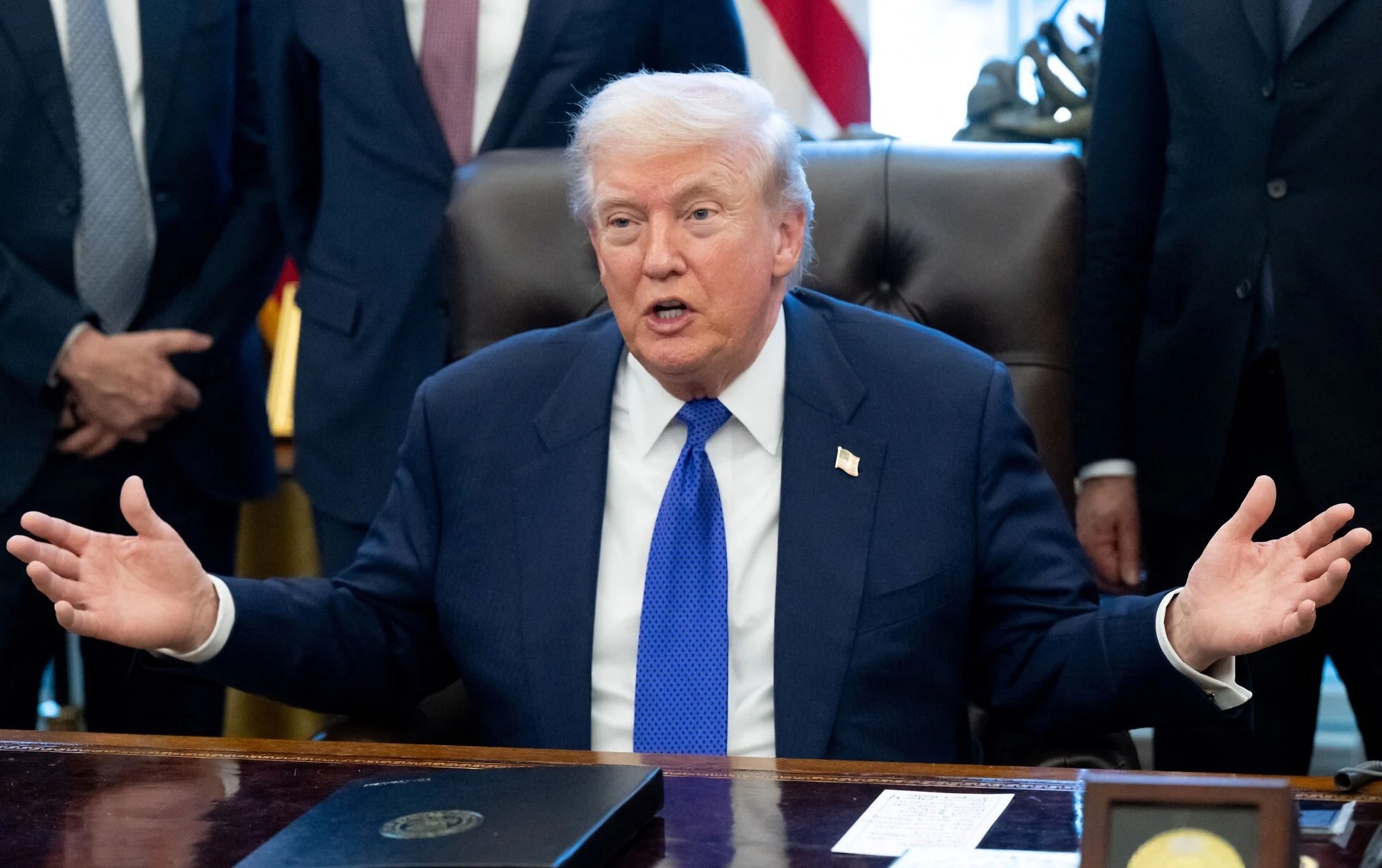
Donald Trump has said he may speak directly with Lai Ching-te regarding a possible US arms sale to Taiwan, a move that could mark a major break from decades of diplomatic tradition between Washington and Taipei.
Speaking to reporters on Wednesday, Trump said, “I’ll speak to him. I speak to everybody… we’ll work on that, the Taiwan problem,” when asked whether he planned to contact Lai before making a decision on a proposed $14 billion arms package for Taiwan.
If the conversation takes place, it would be one of the most significant direct interactions between US and Taiwanese leaders since 1979, when the United States formally cut diplomatic ties with Taiwan and recognized the government of China in Beijing.
The reported weapons package includes advanced anti-drone systems and air-defense missiles aimed at strengthening Taiwan’s ability to defend itself against growing military pressure from China. Beijing considers Taiwan part of its territory and has repeatedly warned against foreign support for the island. Chinese authorities have not ruled out using force to bring Taiwan under their control.
Lai Ching-te, who took office in 2024, has strongly pushed for increasing Taiwan’s defense capabilities in response to rising tensions across the Taiwan Strait. His administration has focused on military modernization and closer security cooperation with Western allies.
The United States has long maintained a delicate balance between supporting Taiwan and preserving diplomatic relations with China. Although Washington officially recognizes Beijing under the “One China” policy, the 1979 Taiwan Relations Act legally allows the US to provide Taiwan with defensive weapons.
Trump also praised his relationship with Xi Jinping, describing it as “amazing” following a recent two-day summit in Beijing. Analysts say his comments highlight the complex balancing act Washington faces between maintaining ties with China and supporting Taiwan’s security.
The possibility of direct talks and a major new arms deal is expected to draw strong reactions from Beijing, which views any official engagement between US and Taiwanese leaders as interference in China’s internal affairs. The development could further increase tensions in one of the world’s most sensitive geopolitical regions.






+ There are no comments
Add yours