







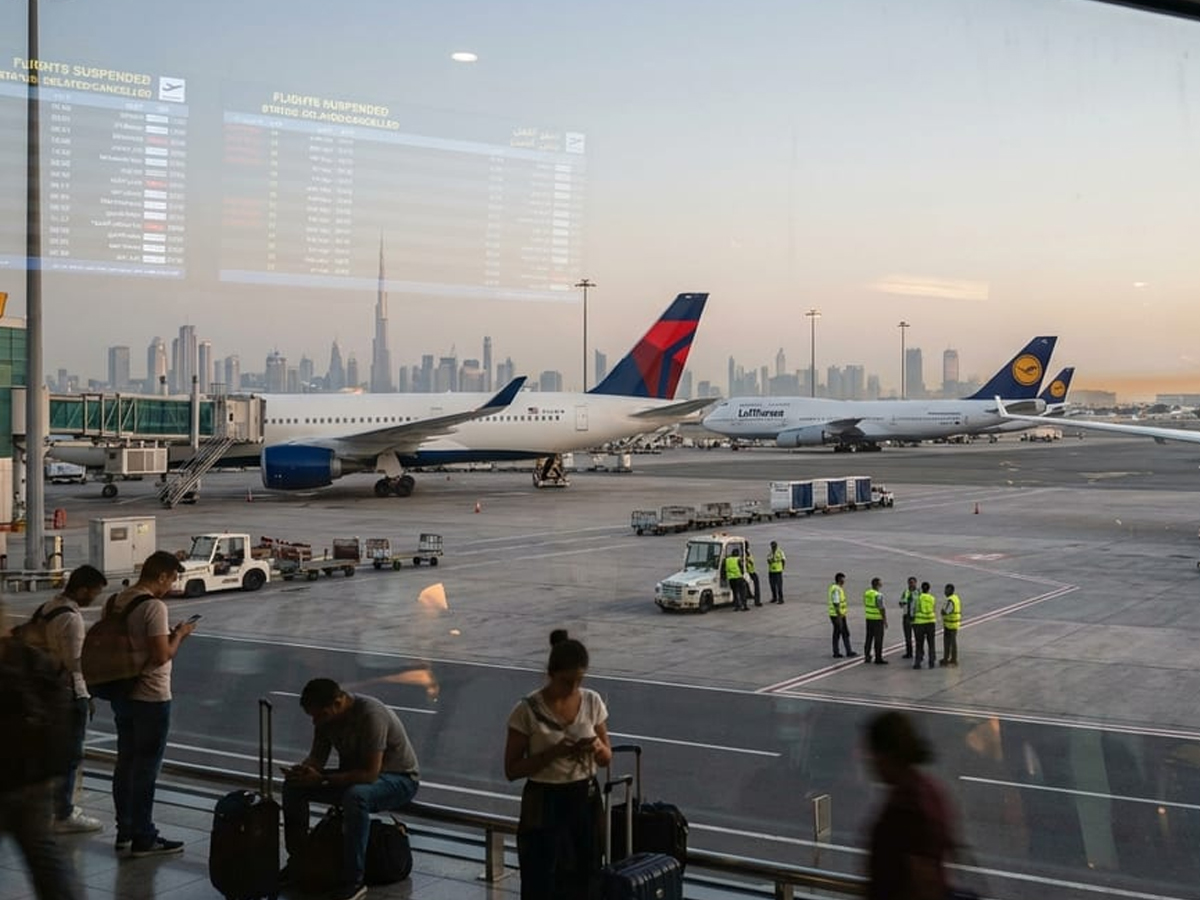
Major international travel disruptions are continuing as the conflict in Iran forces airlines to cancel flights, operate limited services, and reroute air traffic. Thousands of passengers are stranded, and the global travel and tourism industry is facing significant financial losses.
Airspace over key parts of the Middle East, including the United Arab Emirates, Qatar, Kuwait, Bahrain, and Iraq, has been partially closed or restricted due to security concerns. As a result, major carriers such as Emirates, Etihad Airways, and Qatar Airways have suspended full schedules and are operating only a limited number of relief and repatriation flights. Other international airlines have also cancelled or rerouted services that normally pass through Gulf airspace.
Emirates has resumed select flights from Dubai, prioritising passengers who were stranded by earlier cancellations. Etihad Airways has restarted some routes from Abu Dhabi on a reduced schedule, while Qatar Airways is offering occasional repatriation services from Hamad International Airport. Airlines continue to assess routes and flight schedules carefully to ensure safety while meeting urgent passenger needs.
Passengers report long delays, frequent cancellations, and rising ticket prices as airlines adapt to the ongoing disruptions. Many travellers remain stuck in Gulf airports or alternative hubs while airlines and governments coordinate evacuation and repatriation efforts.
The World Travel & Tourism Council estimates the conflict is costing the sector hundreds of millions of dollars each day. The financial impact comes from grounded flights, lost bookings, and the closure of major transit hubs. Analysts warn that the situation could worsen if the conflict continues, potentially affecting travel across Europe, Asia, and North America due to rerouted flights and higher operational costs.
Airport authorities are urging passengers to check with their airlines before travelling, as schedules continue to change rapidly. Governments have issued travel advisories, recommending citizens avoid non-essential travel to the region, while offering consular support to those affected.
Industry experts say the disruptions represent one of the most severe challenges for airlines since the COVID-19 pandemic. The combination of cancelled flights, limited airspace, and increased operational costs has strained airlines and travellers alike, leaving the global travel industry bracing for further instability.
Passengers are advised to stay informed of updates from airlines and official travel advisories as the situation continues to develop.









+ There are no comments
Add yours