






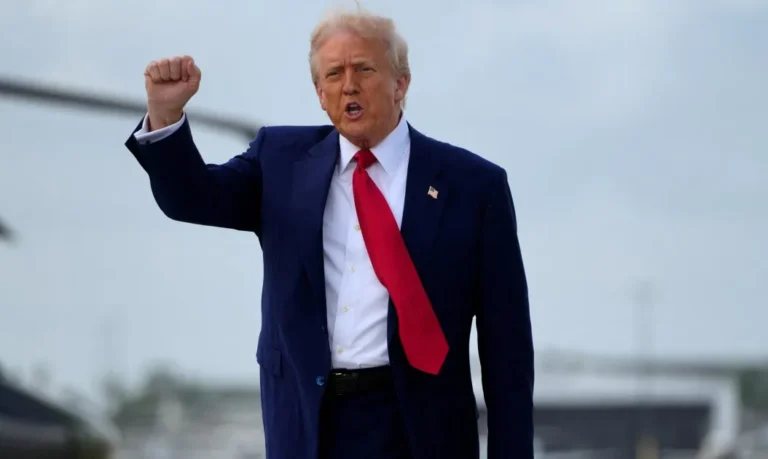
Donald Trump has issued a stark warning that the United States would “massively blow up” a major Iranian gas field if Iran launches another attack on Qatar, sharply escalating rhetoric amid already heightened tensions in the Gulf region.
The comments come as concerns grow over regional stability following recent threats and military posturing involving Iran and Qatar. Trump’s statement signals a potential shift toward a more aggressive response should hostilities intensify, raising fears of broader conflict in a region critical to global energy supplies.
Energy markets reacted nervously to the remarks, with analysts warning that any escalation involving Iran could disrupt key gas and oil infrastructure. Iran controls significant portions of the world’s energy reserves, and any strike on its facilities could send shockwaves through global markets, particularly at a time when prices are already under pressure from geopolitical risks.
Trump did not provide specific details about the potential target but emphasized that any renewed attack on Qatar would trigger a decisive and overwhelming response. His comments underscore ongoing concerns about security in the Gulf, where vital shipping routes and energy installations remain vulnerable.
Officials and analysts have cautioned that such rhetoric could further inflame tensions between regional powers. The Gulf region, home to some of the largest natural gas fields in the world, plays a crucial role in supplying energy to global markets, making any threat to infrastructure a matter of international concern.
While there has been no immediate response from Iranian authorities, the warning is likely to draw strong reactions and could complicate diplomatic efforts aimed at reducing tensions. Qatar, which hosts key U.S. military facilities, remains strategically important in the region’s security landscape.
The situation continues to evolve, with global markets and policymakers closely monitoring developments. Any escalation could have far-reaching consequences, not only for regional stability but also for energy prices and the broader global economy.




+ There are no comments
Add yours