







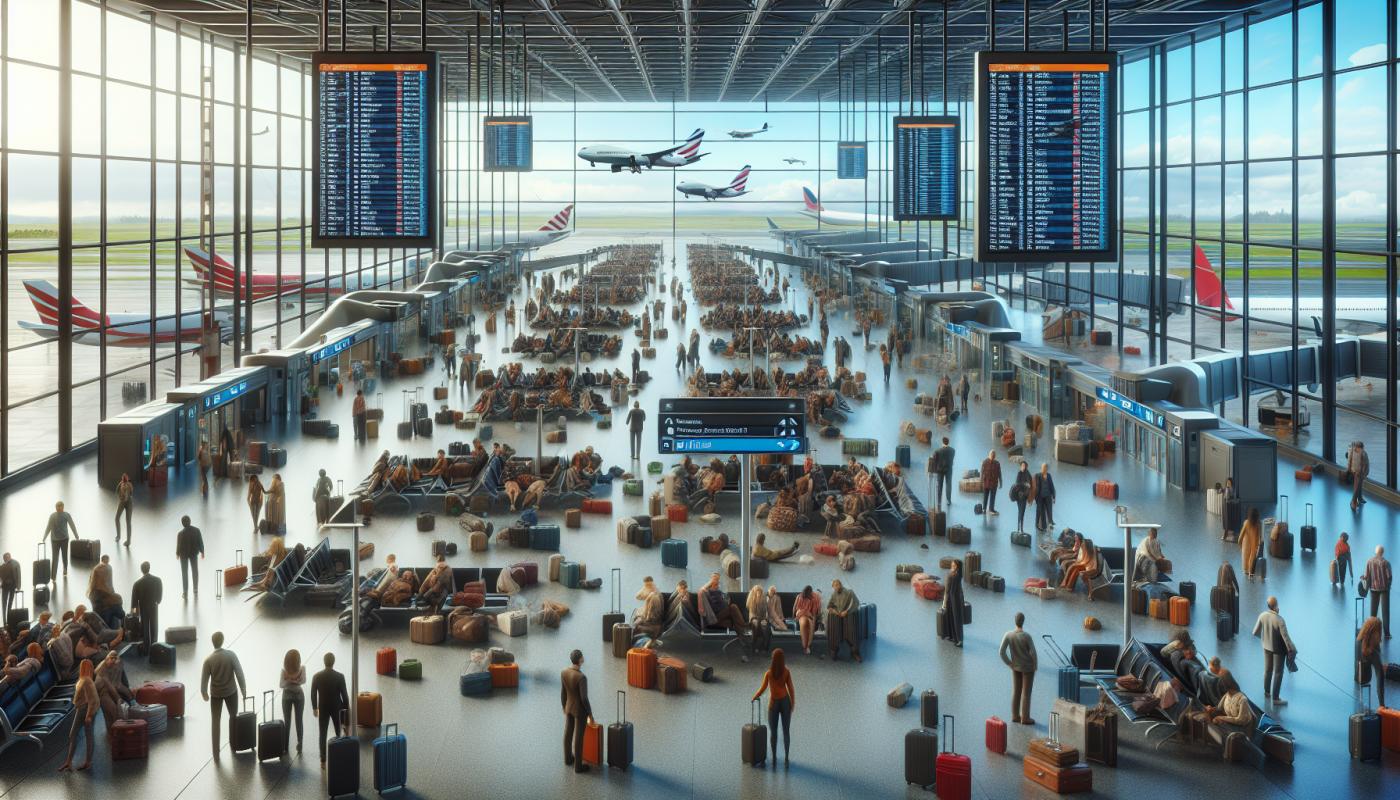
Air travel across several regions has been severely disrupted as the ongoing conflict in the Middle East forces multiple countries to close or restrict their airspace. The situation has led to the cancellation and delay of thousands of flights, leaving many passengers stranded at airports around the world.
Airlines are working urgently to manage the disruption as safety concerns and restricted flight routes affect normal operations. Several major carriers have been forced to reroute aircraft or temporarily suspend services passing through affected areas, causing delays across international travel routes connecting Asia, Europe and the Middle East.
India’s national carrier, Air India, has started operating special flights to assist passengers stranded due to the sudden airspace restrictions. The airline has scheduled additional services to help travelers reach their destinations despite the ongoing disruptions.
Similarly, Etihad Airways has resumed limited operations while adjusting flight paths to avoid conflict zones. The airline has also increased certain services to accommodate passengers affected by cancellations and delays.
Aviation experts say the Middle East is one of the most important global aviation corridors. When airspace in the region becomes restricted, airlines are forced to take longer alternative routes, which increases flight times and operating costs.
Airports in several countries are now experiencing heavy congestion as airlines work to reschedule flights and manage stranded passengers. Authorities have advised travelers to check flight updates regularly and stay in contact with their airlines before heading to the airport.
With tensions in the region continuing, aviation analysts warn that disruptions to global travel could persist if the conflict escalates further. Airlines and aviation authorities are closely monitoring the situation while trying to maintain safe and efficient travel operations.









+ There are no comments
Add yours