







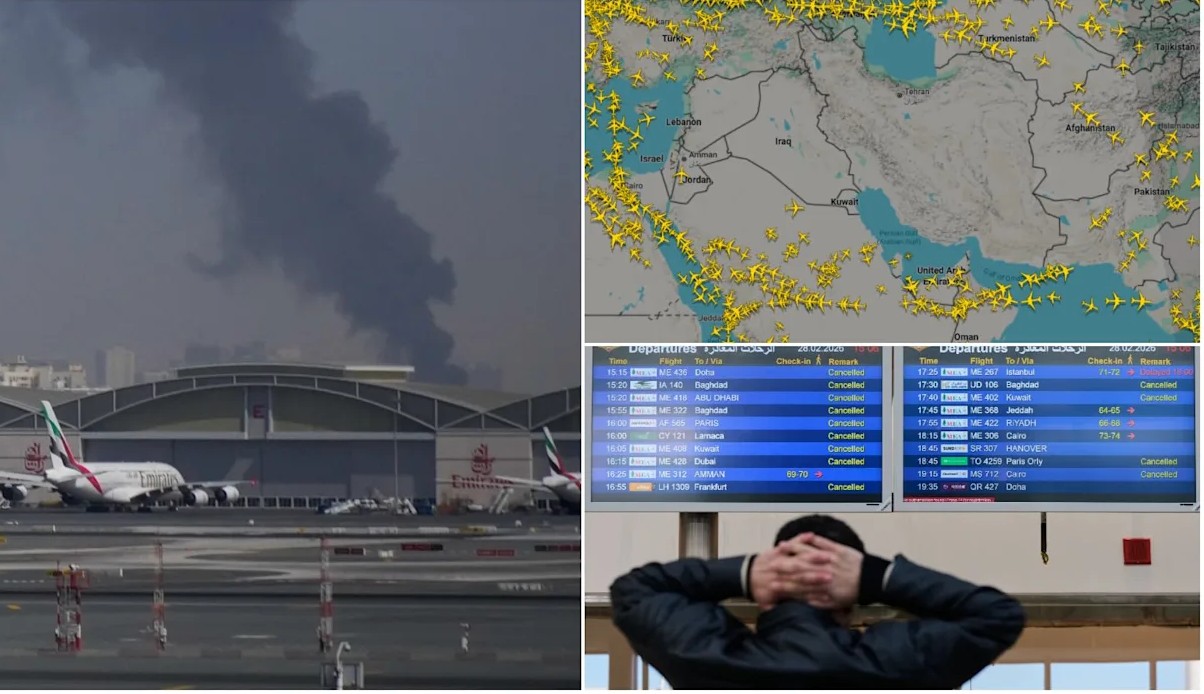
The escalating conflict in Iran is sending shockwaves through global travel, leaving millions of passengers stranded, flights canceled, and airlines scrambling to adjust operations. As tensions in the Middle East intensify, international airspace closures, security concerns, and surging fuel costs are disrupting travel on an unprecedented scale, affecting both leisure and business travelers worldwide.
Major airports across the region, including Dubai International, Abu Dhabi International, and Hamad International in Doha, have been partially closed or subjected to strict operational restrictions. These hubs normally serve as critical connecting points between Europe, Asia, Africa, and the Americas. With flights rerouted or canceled entirely, travelers are experiencing delays of hours or even days, while many are forced to seek alternative routes at significantly higher costs. Families traveling for vacations, professionals attending business meetings, and pilgrims returning home have all found themselves stranded far from their destinations, often facing limited access to customer support and accommodation shortages.
The disruption has driven up airfare dramatically. Routes that once relied on Middle Eastern hubs now require longer detours, leading to higher ticket prices for long-haul flights. Some travelers report fares rising by several times their usual cost, while last-minute bookings are increasingly difficult to secure. Airlines are attempting to manage reduced capacity and rerouted flights, but the unpredictability of the conflict is leaving both carriers and passengers navigating a highly volatile environment.
Tourism industries around the globe are already feeling the strain. Cities in Asia, Europe, and Africa that rely on Middle Eastern connections have seen mass cancellations, prompting hotels and tour operators to adjust plans and warn of potential revenue losses. Leisure travelers are reconsidering spring and summer trips due to safety concerns and the growing likelihood of delays, while airlines continue to adjust schedules to cope with the shifting geopolitical landscape.
Business travelers are equally affected, with critical meetings, conferences, and corporate trips delayed or canceled. Companies face rising expenses as they seek alternative routes for employees, often on short notice. International commerce, cargo shipments, and supply chains are also under pressure, illustrating how quickly a regional conflict can ripple through global economic and logistical networks.
Experts warn that the disruption may continue for weeks or even months if hostilities persist. Governments and airlines are urging travelers to remain flexible, monitor updates closely, and prepare for longer journeys and higher travel costs. The crisis underscores how interconnected global travel has become and how geopolitical instability in one region can create widespread personal and economic impacts for travelers across the world.









+ There are no comments
Add yours