







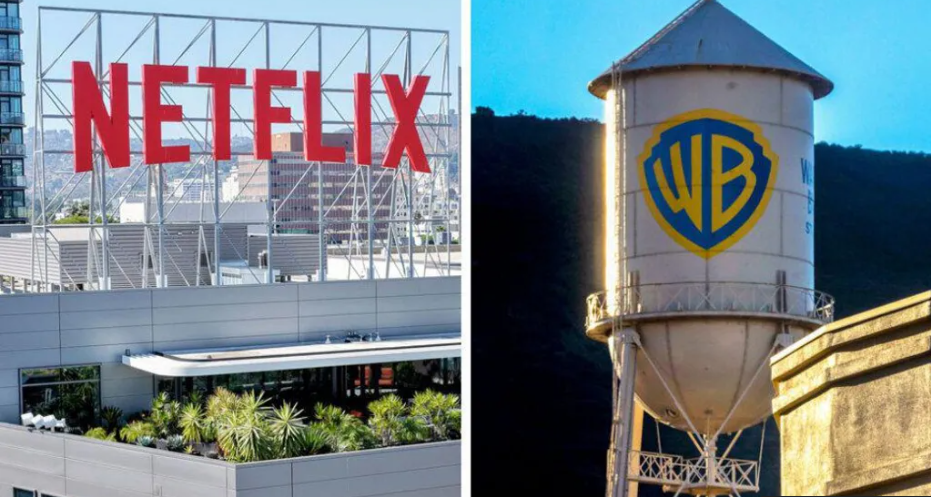
Warner Bros., one of Hollywood’s oldest and most influential studios, is facing the most turbulent chapter in its century-long history as corporate pressures and industry upheaval collide. What began as a high-stakes merger has evolved into a crisis that many within the film and television business now describe as a nightmare, reshaping not only the studio itself but the broader future of Hollywood.
Since the formation of Warner Bros. Discovery, the company has struggled to manage heavy debt while navigating an entertainment landscape rapidly shifting away from traditional cable television and toward streaming platforms. In response, executives have pursued aggressive cost-cutting measures, including layoffs, reduced production budgets, and the removal of content from streaming services. While these steps have pleased some investors, they have fueled anxiety among creatives who see a studio once known for artistic ambition becoming increasingly driven by financial survival.
The uncertainty surrounding Warner Bros. has been amplified by industry-wide disruption. Movie theaters continue to recover unevenly from pandemic-era closures, cable subscriptions are declining at historic rates, and streaming growth has slowed as audiences fragment across platforms. Warner Bros. sits at the intersection of these challenges, owning both prestige brands like HBO and legacy cable networks whose revenues are shrinking. Balancing those competing realities has proven difficult, leaving the company exposed to mounting criticism and speculation.
For Hollywood workers, the impact has been immediate. Production schedules have been scaled back, long-term projects paused, and employment opportunities reduced. Writers, directors, and crew members say the instability has created an atmosphere of constant uncertainty, with careers and livelihoods tied to corporate decisions far removed from the creative process. The ripple effects extend beyond Warner Bros., affecting vendors, independent producers, and regional production hubs that rely on consistent studio output.
The situation has also reignited concerns about consolidation in the entertainment industry. As studios merge and assets concentrate under fewer corporate umbrellas, critics argue that creative diversity and competition are being eroded. The possible loss of Warner Bros. as an independent creative force would mark a significant shift in Hollywood’s power structure, with fewer studios controlling more of the world’s cultural output.
Investors, meanwhile, remain focused on profitability in an increasingly unforgiving market. Streaming services that once prioritized growth at any cost are now under pressure to deliver returns, forcing companies like Warner Bros. Discovery to reassess long-standing business models. That recalibration has often come at the expense of risk-taking and long-term creative investment, reinforcing fears that innovation is being sacrificed for short-term financial stability.
Once a symbol of Hollywood’s ability to evolve, Warner Bros. now reflects an industry in transition and turmoil. The studio’s internal struggles highlight the broader challenge facing entertainment companies as they attempt to adapt to changing consumer habits, technological disruption, and investor expectations. Whether Warner Bros. ultimately stabilizes or undergoes further transformation, the battle over its future has already left a lasting mark.
For many in Hollywood, the message is clear: the crisis at Warner Bros. is not an isolated event but a warning. As the industry confronts its next era, the fate of one legendary studio has become a measure of how much Hollywood itself is willing—or able—to change.










+ There are no comments
Add yours