






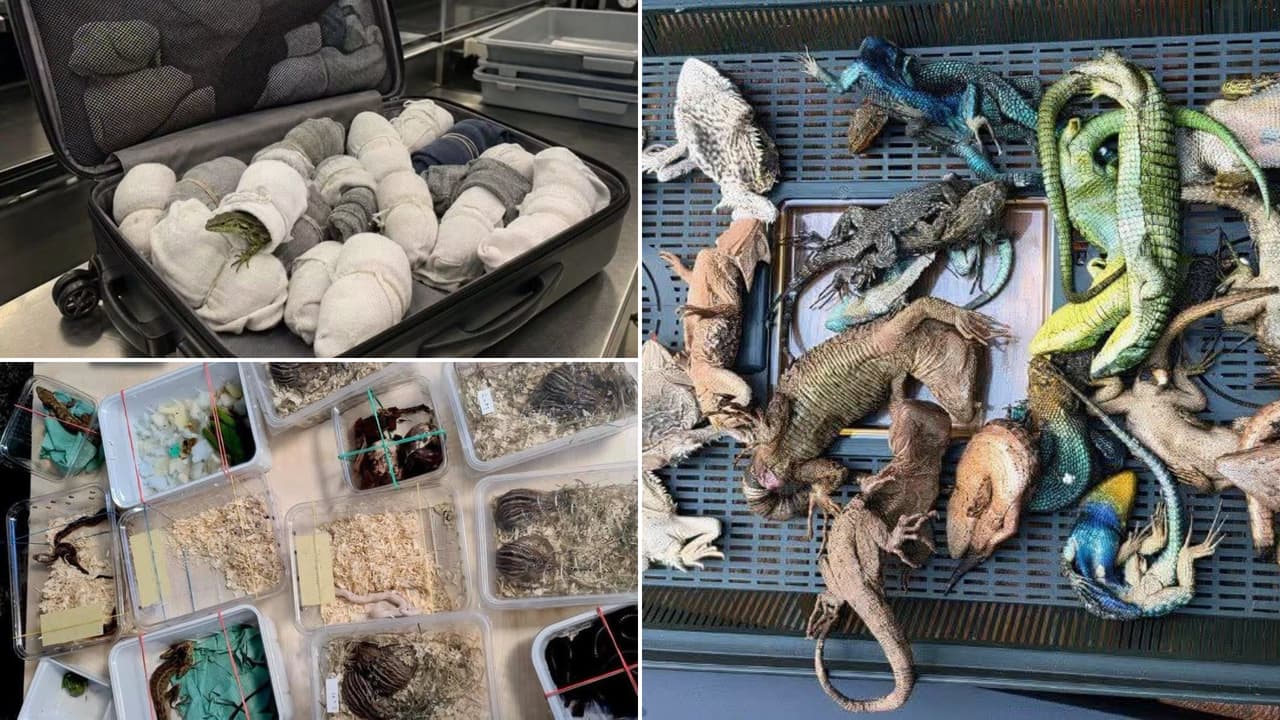
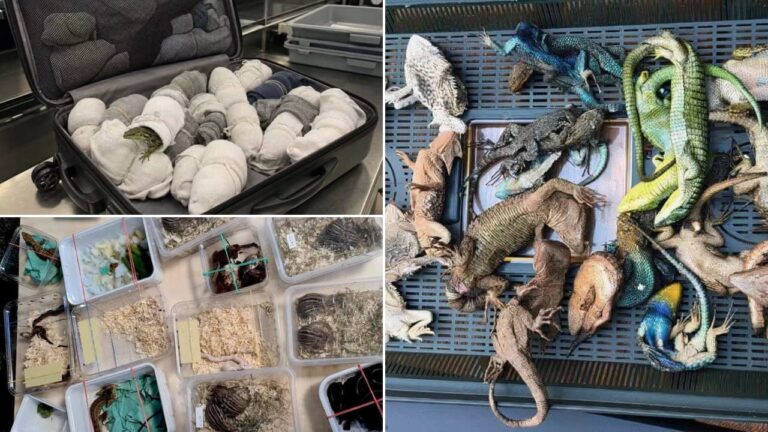
A Mexican firefighter has reportedly been stopped at a German airport after authorities discovered dozens of reptiles allegedly concealed inside his luggage, including 37 venomous snakes and 55 lizards hidden in bottles and socks. The extraordinary discovery has raised fresh concerns about illegal wildlife trafficking, animal welfare and the international movement of protected species.
According to the reported incident, airport authorities uncovered a total of 92 reptiles during an inspection of the traveller’s belongings. The collection allegedly included 37 venomous snakes and 55 lizards, with some animals concealed in bottles and others hidden inside socks in an apparent attempt to evade detection.
The unusual concealment method has drawn attention to the risks associated with transporting live reptiles through international airports. Venomous snakes can pose a serious danger to handlers and passengers if they escape, while cramped containers and unsuitable conditions can cause severe stress, dehydration, injury or death to the animals themselves.
The discovery also highlights the challenges faced by airport security and wildlife authorities in identifying illicit shipments. Live reptiles can be difficult to detect when concealed in ordinary luggage, particularly when traffickers attempt to disguise them as harmless personal belongings.
Wildlife trafficking is an international concern involving the illegal capture, transport and sale of animals for the exotic pet trade, private collections and other commercial purposes. Reptiles are among the animals targeted in this trade, with certain species protected under international agreements that regulate cross-border commerce.
The Convention on International Trade in Endangered Species of Wild Fauna and Flora, known as CITES, establishes controls on international trade in listed species to help ensure that such trade does not threaten their survival. Depending on the species, transporting reptiles across borders may require permits, certificates and compliance with additional national regulations.
However, the presence of live reptiles in luggage does not by itself establish which laws have been violated. Investigators would need to determine the animals’ species, their origins, the traveller’s intentions and whether the necessary documentation had been obtained.
The reported case also raises questions about the animals’ eventual fate. Reptiles recovered from suspected illegal shipments may require specialist veterinary examinations, secure housing and careful handling, particularly when venomous species are involved. Their return to the wild, if considered, would require expert assessment of their origins, health and ecological suitability.
For authorities, the incident illustrates how wildlife enforcement extends beyond protecting endangered species. It also involves public safety, animal welfare and cooperation between customs officials, specialist handlers and conservation agencies.
If confirmed, the seizure would represent a striking example of the lengths to which wildlife smugglers may allegedly go to conceal live animals. It serves as a reminder that the illegal wildlife trade can turn airports into critical front lines in the effort to protect animals and prevent dangerous species from being transported across international borders.
The case underscores a wider message: wildlife is not ordinary cargo, and concealing living animals in bottles or clothing can expose both people and the animals to serious risks.









+ There are no comments
Add yours