






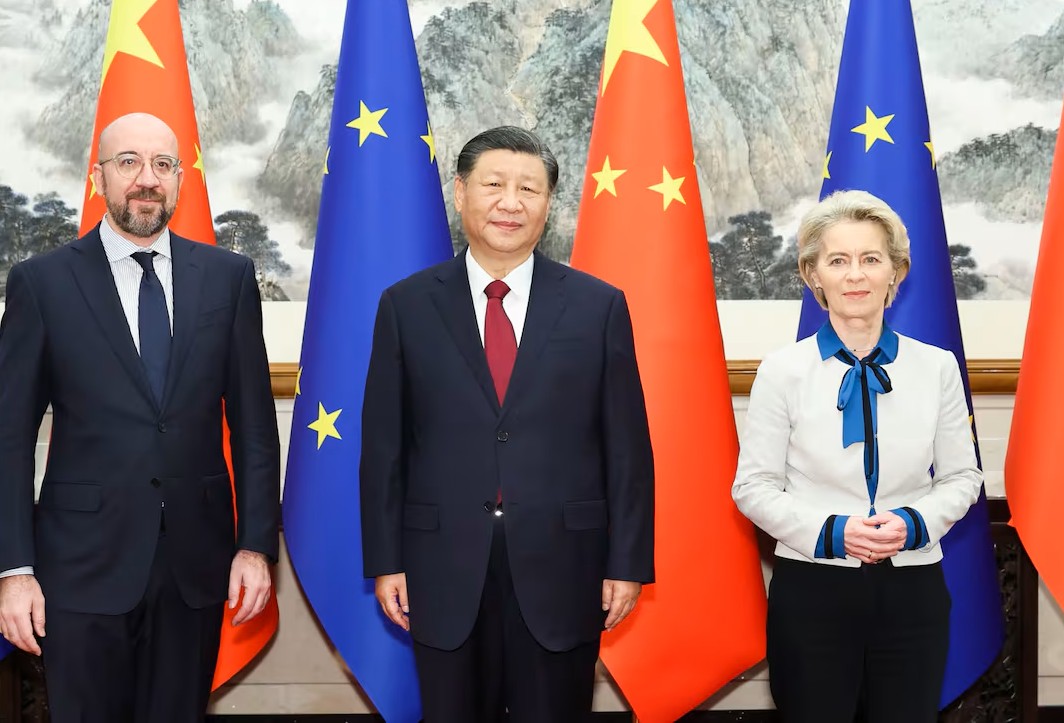
China is increasingly leveraging divisions among European Union member states to strengthen its economic influence and weaken the bloc’s unified trade position, according to analysts, as Brussels seeks to adopt a tougher stance on economic security and market competition.
Experts say Beijing has pursued a “divide and conquer” strategy by deepening bilateral ties with individual EU countries while engaging separately with major European companies. This approach is seen as reducing the effectiveness of collective EU policies on trade, investment, and technology, making it more difficult for the bloc to present a united front on sensitive economic issues.
The European Union has in recent years introduced measures aimed at protecting strategic industries, reducing dependence on critical imports, and addressing concerns over unfair trade practices. However, differences in national economic priorities continue to complicate decision-making. While some member states advocate stronger safeguards against Chinese economic influence, others remain cautious because of their significant trade and investment ties with Beijing.
Analysts argue that these internal differences create opportunities for China to negotiate with individual governments and businesses rather than confronting the EU as a single economic bloc. Countries with strong export links or major Chinese investments may be more reluctant to support policies that could strain commercial relations.
Businesses operating across Europe also face increasing pressure as geopolitical tensions reshape global supply chains. Companies with significant exposure to the Chinese market must balance commercial interests with evolving EU regulations on investment screening, technology transfers, and economic resilience.
The growing debate reflects a broader shift in Europe’s approach toward China. While Beijing remains one of the EU’s largest trading partners, concerns over market access, industrial subsidies, supply chain security, and strategic dependence have prompted calls for greater economic diversification.
As trade disputes and geopolitical competition continue to intensify, policymakers face the challenge of maintaining constructive economic engagement with China while preserving the unity needed to defend the European Union’s long-term strategic and commercial interests. Analysts believe the bloc’s ability to coordinate policies among its 27 member states will play a decisive role in shaping future EU-China trade relations.







+ There are no comments
Add yours