







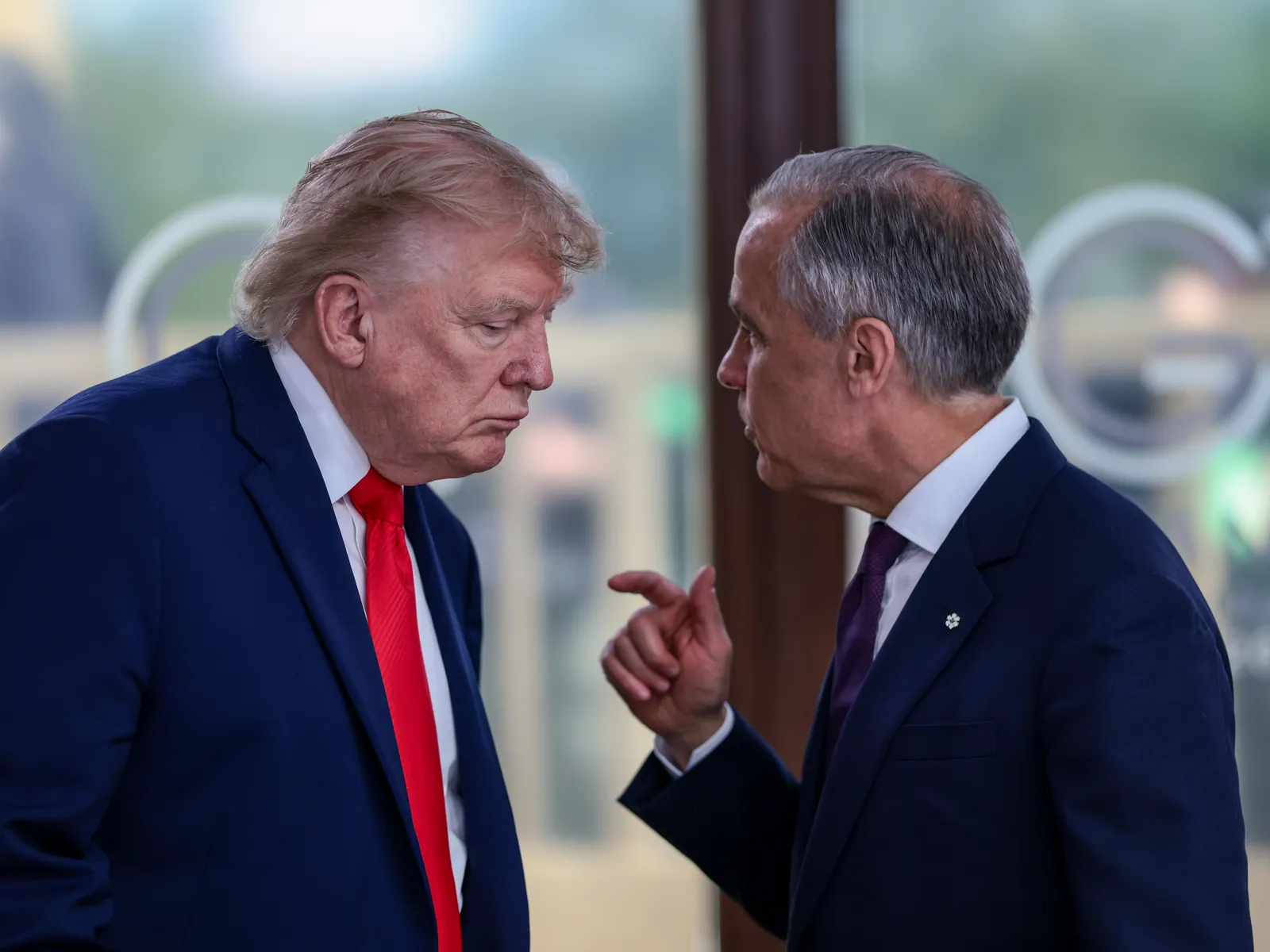
The administration of U.S. President Donald Trump has announced a sweeping 50 percent tariff on a broad range of Canadian goods, significantly escalating trade tensions between the two neighboring countries and deepening an economic dispute that has intensified since Trump’s return to the White House.
U.S. officials said the new tariffs were introduced in response to what they described as Canada’s “continued discrimination” against American businesses and products. The administration argued that stronger trade measures were necessary to protect U.S. industries and encourage what it called fairer market access for American exporters.
The latest move represents one of the toughest trade actions taken against Canada in recent years. Since winning the 2024 presidential election, Trump has pursued an aggressive approach toward America’s northern neighbor, imposing multiple rounds of tariffs while criticizing Canadian trade policies. He has also repeatedly made controversial remarks suggesting Canada should become the “51st state” of the United States, comments that have been firmly rejected by Canadian leaders.
Canadian officials have condemned the new tariffs, warning that the measures could harm businesses, workers, and consumers on both sides of the border. The two countries share one of the world’s largest trading relationships, with billions of dollars in goods crossing the border each day. Economists have cautioned that higher import duties could increase costs for manufacturers that rely on cross-border supply chains and lead to higher prices for consumers.
Business groups have also expressed concern that the dispute could disrupt industries including automotive manufacturing, agriculture, energy, and construction, all of which depend heavily on integrated North American trade networks.
The latest tariffs add another chapter to a relationship that has become increasingly strained despite decades of close economic cooperation. Analysts say the measures could trigger retaliatory actions from Canada if negotiations fail to ease the dispute.
While both governments have indicated they remain open to dialogue, there is little sign of an immediate breakthrough. Until a negotiated solution is reached, businesses on both sides of the border are preparing for continued uncertainty as the trade conflict enters a more confrontational phase.









+ There are no comments
Add yours