







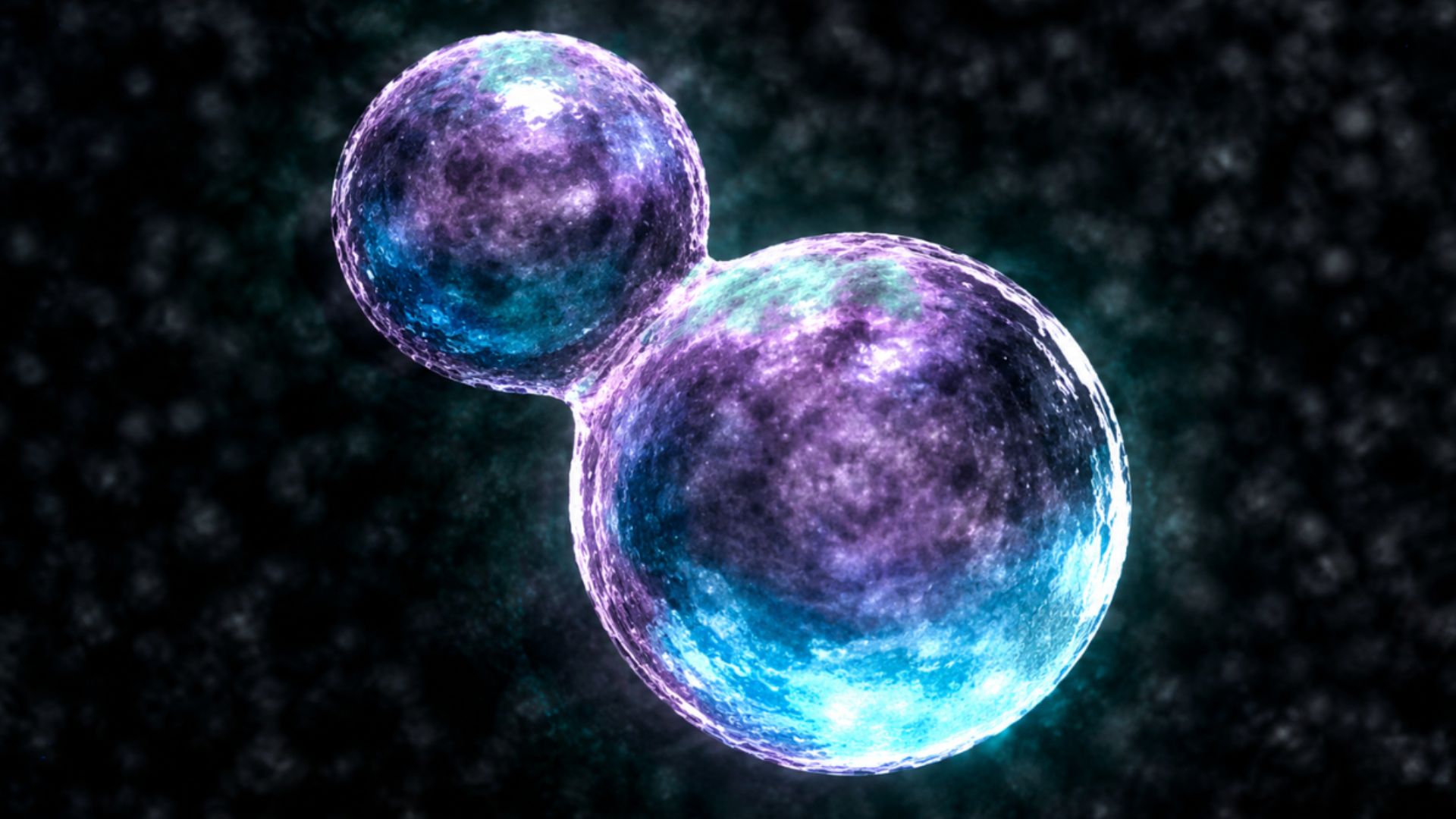
Scientists have developed a groundbreaking artificial cell capable of growing and dividing, marking a major milestone in synthetic biology and opening new possibilities for medical research, drug development and environmental applications.
The artificial cell, named SpudCell, is designed to mimic some of the most fundamental characteristics of living organisms without being a fully living cell. Researchers say the achievement represents years of work to understand how the simplest forms of life function and reproduce.
Unlike conventional artificial cells that can perform only limited biological tasks, SpudCell is able to increase in size and divide into new cells through a carefully engineered process. The breakthrough provides scientists with a simplified model for studying the basic mechanisms of life while avoiding the complexity of natural cells.
Researchers believe the innovation could transform biomedical science by providing a safe platform for testing new medicines and investigating diseases at the cellular level. Artificial cells may eventually be programmed to deliver drugs directly to diseased tissues, repair damaged cells or produce therapeutic compounds inside the human body.
Beyond medicine, SpudCell could also play an important role in environmental protection. Scientists envision future versions of the artificial cell being engineered to detect harmful pollutants, break down toxic chemicals or capture carbon dioxide from the atmosphere. Such technologies could contribute to cleaner ecosystems and more sustainable industrial processes.
The research also offers valuable insights into one of biology’s oldest questions—how life begins. By recreating the essential processes of growth and division in a laboratory-built system, scientists hope to better understand the transition from simple chemical molecules to living organisms on the early Earth.
Despite the excitement surrounding the discovery, researchers stress that SpudCell is not a synthetic life form capable of evolving independently. Instead, it is a highly controlled experimental system designed to replicate only selected functions of natural cells. Considerable work remains before the technology can be applied outside laboratory settings.
Experts describe the achievement as an important step toward building programmable biological systems that could address challenges in healthcare, agriculture and environmental conservation. As research continues, SpudCell may become a powerful tool for exploring the building blocks of life and developing innovative solutions to some of the world’s most pressing scientific and medical problems.










+ There are no comments
Add yours