







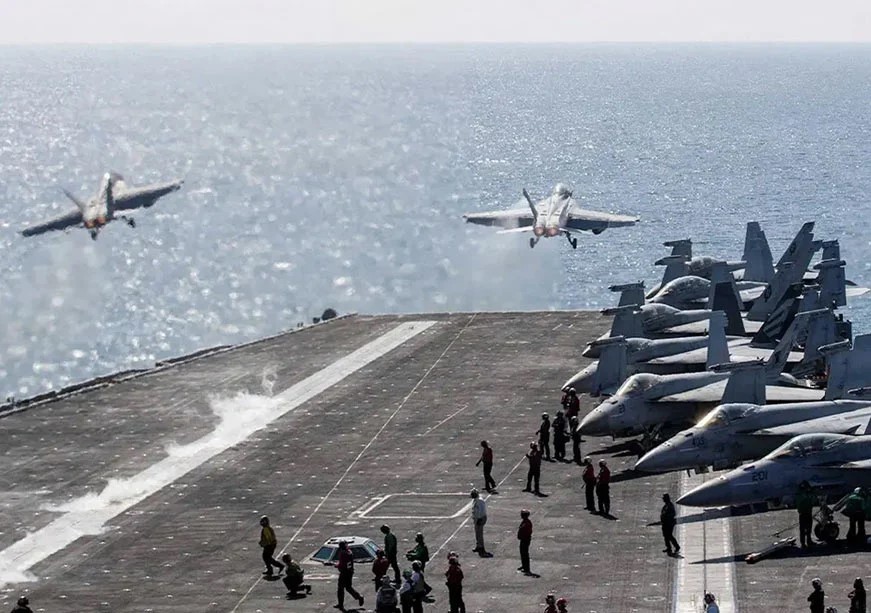
The United States has officially concluded “Operation Epic Fury,” marking a shift from active military operations against Iran to a defensive posture focused on deterrence and regional stability. The move comes after weeks of heightened conflict that saw U.S. forces target key Iranian military capabilities, particularly those linked to maritime disruption and missile systems.
According to U.S. officials, the operation achieved its primary objectives by weakening Iran’s ability to threaten shipping routes and project force across the Gulf. With offensive actions now halted, Washington has repositioned its strategy toward safeguarding critical waterways, especially the Strait of Hormuz, a vital corridor for global energy supplies.
Despite the end of the operation, tensions in the region remain high. The Strait of Hormuz continues to experience uncertainty, with concerns over potential blockades and disruptions to commercial shipping. The U.S. Navy and allied forces are maintaining a visible presence in the area, aiming to ensure the free flow of maritime traffic while discouraging further escalation.
Officials have stressed that the current military stance is strictly defensive. The focus has shifted to monitoring, rapid response readiness, and protecting international shipping rather than engaging in new offensive strikes. However, the fragile calm underscores the volatility of the situation, as both sides remain wary and alert.
At the diplomatic level, efforts are underway to ease tensions and establish a more durable framework for stability. Talks involving international mediators are ongoing, though progress remains uncertain amid mutual distrust and competing strategic interests.
The conclusion of Operation Epic Fury represents a significant pivot in U.S. policy, but it does not signal the end of risk in the region. With unresolved disputes, strategic chokepoints under pressure, and the potential for miscalculation, the Gulf remains a focal point of global concern.










+ There are no comments
Add yours