






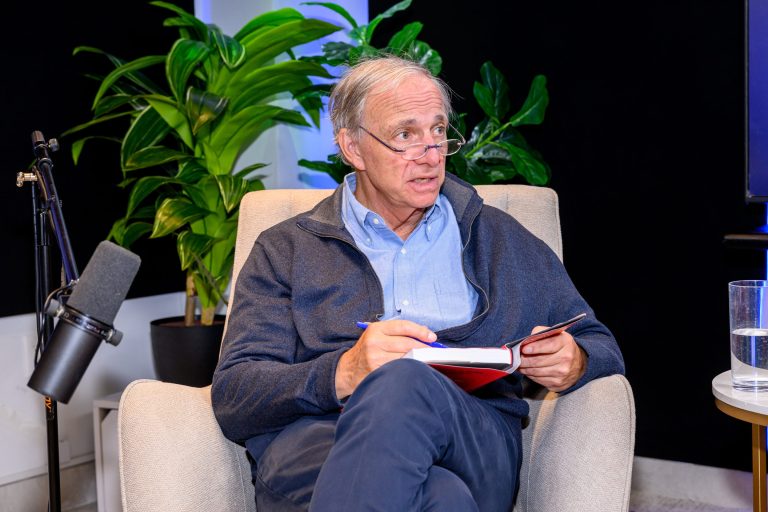
Billionaire investor Ray Dalio has issued one of his strongest warnings yet: the rise of AI and humanoid robots will benefit the top 1% to 10% far more than the rest of society — unless governments introduce serious wealth redistribution policies.
Dalio, known for his economic cycle theories and global macro predictions, argues that the coming technological revolution will reshape labor markets, corporate power, and income distribution at a scale modern societies are not prepared for. And if policymakers fail to respond, he says the world could face historic levels of inequality and social tension.
The Next Era of Inequality: AI Gains for the Top, Pressure for Everyone Else
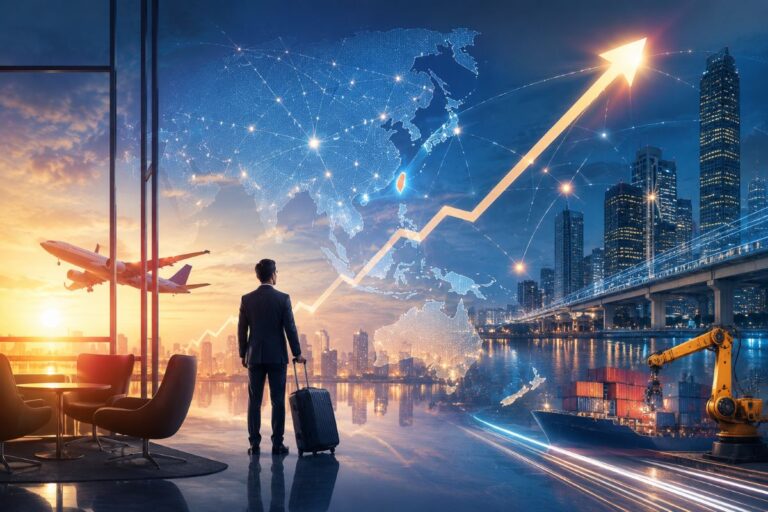
Ray Dalio believes AI will be as transformative as the Industrial Revolution — but the speed of change will be far more disruptive.
According to him:
AI and humanoid robots will dramatically increase productivity.
Companies owned by the wealthiest groups will capture most of that value.
Millions of workers will face income stagnation or job displacement.
In other words, the benefits will not be shared evenly. Those who own the technology will gain exponentially more than those who rely on wages.
Dalio warns that if this imbalance continues unchecked, it will create tensions between economic classes much larger than those already seen across the U.S. and Europe.
Why Dalio Believes Redistribution Will Be Necessary
Dalio’s argument is not ideological — it’s mathematical. He says the problem is rooted in how wealth compounds.
Productivity Will Rise, But Wages Won’t Rise Equally
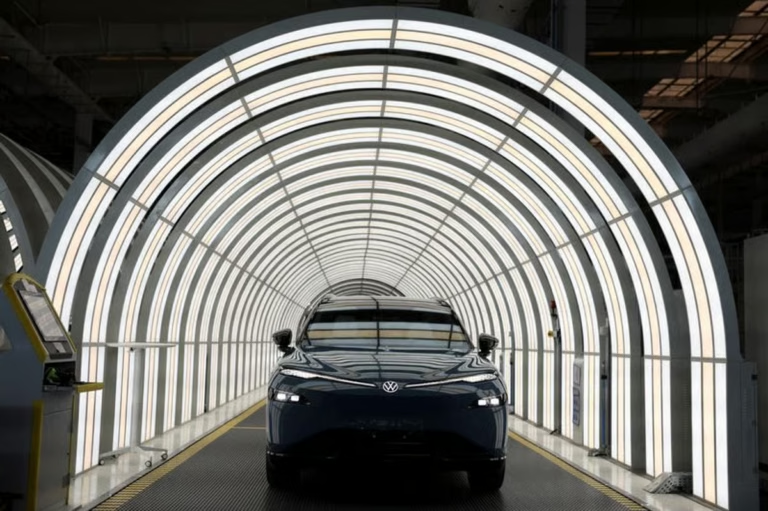
AI systems and robots don’t need salaries, holidays, or benefits. Once companies adopt automation:
Labor costs fall
Output increases
Profits rise — for owners
For everyday workers, however, the upside is limited unless strong policies intervene.
Capital Owners Capture Nearly All Gains
Those who invest in AI infrastructure — the top 1% to 10% — will see rapid wealth growth. Meanwhile, the remaining 90% may see their job security and income shrink as automation advances.
Dalio says this imbalance is not just unfair — it’s dangerous.
Dalio’s Warning: Social Conflict Will Rise Without Action
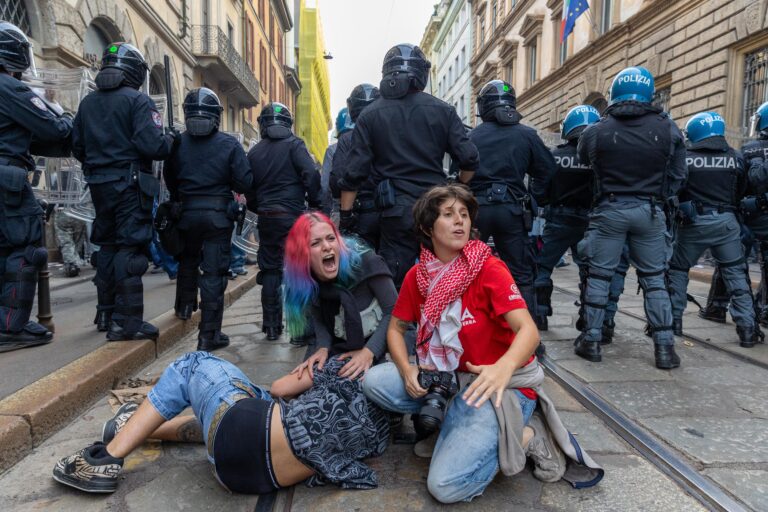
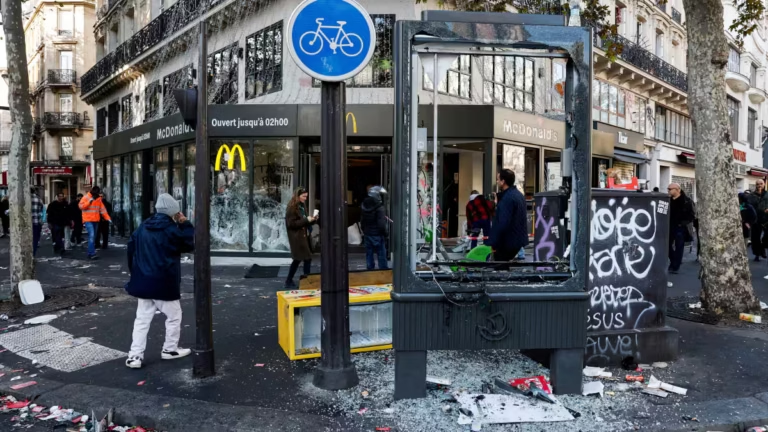
Just as wealth concentration has fueled political division and unrest in the past, he believes the next wave of technological concentration could spark:
Social protests
Populist movements
Political extremism
Instability in democratic systems
When living standards diverge too sharply, Dalio argues, societies enter periods of conflict that historically end in major reform — or collapse.
AI, he says, will accelerate that pressure unless redistribution happens early.
What Redistribution Policies Could Look Like
Dalio isn’t calling for old-fashioned taxation alone. Instead, he says a mix of structural reforms will be needed, including:
1. New forms of taxation on AI-generated productivity
Instead of taxing workers more, governments could tax automation-based profits.
2. Investment in mass upskilling
Workers need rapid, large-scale training programs to compete in an AI-first world.
3. Incentives for companies that share profits with employees
Profit-sharing and equity programs could spread wealth beyond executives and shareholders.
4. Stronger social safety nets
Universal basic income, expanded healthcare, or wage supplements may be required.
Dalio emphasizes that redistribution isn’t about punishing success — it’s about preventing instability.
Why Dalio’s Perspective Matters
Ray Dalio isn’t just an investor. He is one of the world’s most influential macroeconomic thinkers, known for predicting long-term cycles and major shifts in global power.
His warnings often foreshadow real-world changes.
When Dalio says “prepare for a redistribution era,” governments, CEOs, and investors tend to pay attention.
The Bigger Picture: AI Could Create a Two-Tier World
If current trends continue, the future may look like this:
The Top 1% to 10%
Own the AI systems
Receive most of the profits
Live in a world of abundance
The Remaining 90%
Compete against machines
Face job displacement
Struggle with stagnant income
Dalio stresses that this is not a prediction of doom — it’s a call to action.
A Fork in the Road: Choose Stability or Inequality
Dalio believes societies now face a fundamental choice:
Implement redistributive policies that share AI’s benefits broadly
or
Ignore the issue and allow inequality to rise until crises emerge
The world has seen what happens when wealth gaps grow unchecked — political chaos, economic instability, and deep social fractures.
The rise of AI could amplify all of it.
Conclusion: AI Can Be Humanity’s Biggest Gift — If Shared Fairly
Ray Dalio’s message is clear:
AI will reshape economies in ways we’ve never seen before. It can lift societies or divide them. It can create prosperity or polarization.
The outcome depends on policy, planning, and the willingness to distribute gains more evenly.
If governments act early, AI can usher in a new age of progress.
If they don’t, the divide between the top 1% and everyone else could become impossible to repair.








+ There are no comments
Add yours