




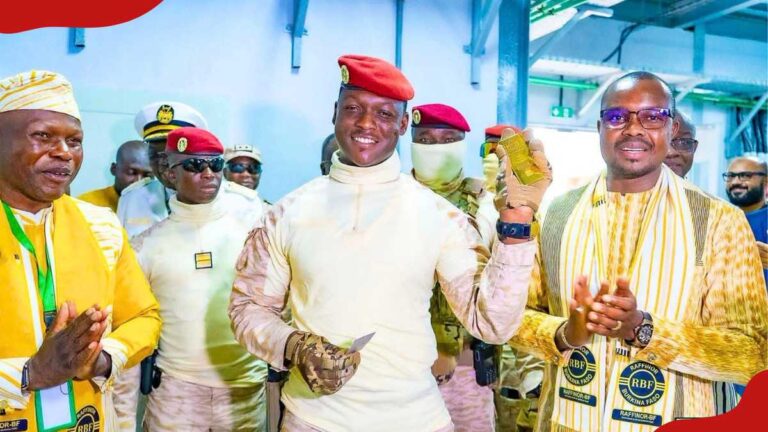
Burkina Faso has taken a major step toward processing more of its mineral wealth at home, inaugurating its first-ever gold refinery as President Ibrahim Traoré calls for greater national control over the country’s natural resources.
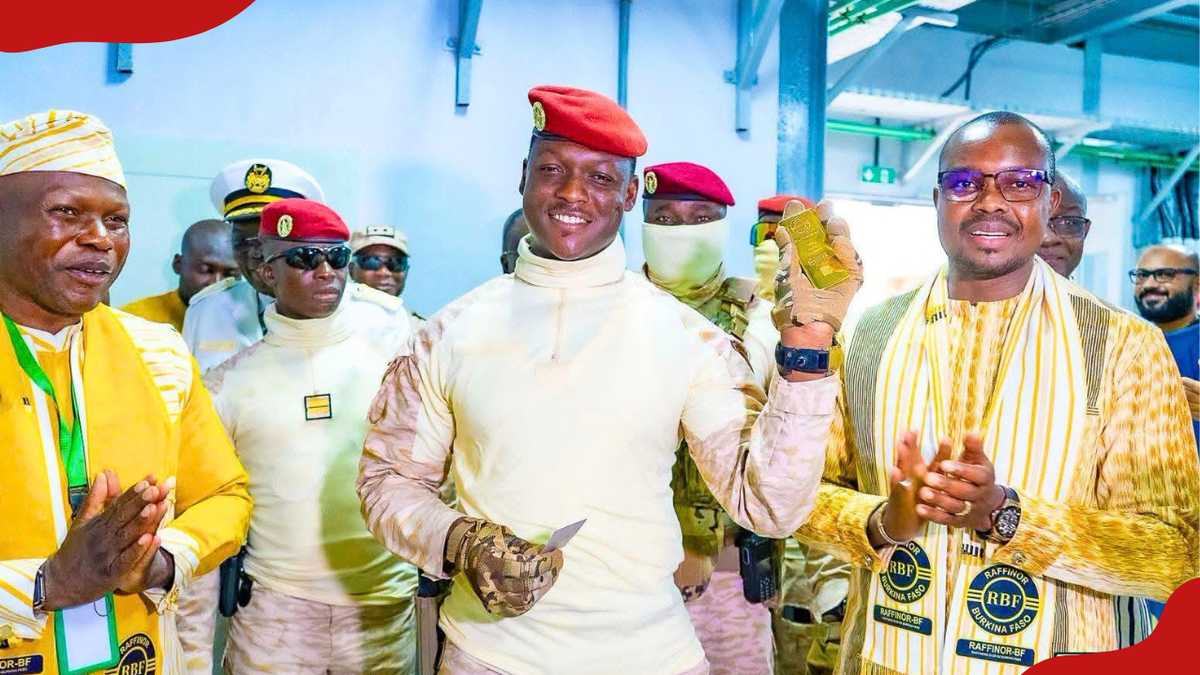
The RAFFINOR-BF refinery was officially opened in the capital, Ouagadougou, on September 28, marking a significant shift for one of West Africa’s major gold-producing countries. The facility has an initial refining capacity of 164 tonnes of gold a year, with plans to expand that capacity to 515 tonnes.
Traoré said Burkina Faso’s ambition extends beyond extracting gold and exporting raw materials. The government wants mineral resources to be processed, controlled, valued and certified inside the country, allowing Burkina Faso to capture more of the economic value generated by its natural wealth.
“Our ambition is no longer to be just a country that extracts and takes its raw materials outside,” Traoré said at the inauguration, according to the presidency. He said the goal was to refine all metals locally and establish the entire value chain within Burkina Faso.
The refinery represents an investment of more than 11 billion CFA francs, roughly $19 million. Burkina Faso’s government says the project was financed principally by the state through the National Precious Metals Company, SONASP, alongside private-sector partners.
The facility includes a foundry, laboratory, gold-storage area, jewellery workshop and administrative buildings. Its modular design allows additional refining lines to be installed as production expands. The refinery is designed to transform gold doré into fine gold bars with a purity of 99.99%.
Burkina Faso produced about 94 tonnes of gold last year, according to authorities, making the metal one of the country’s most important sources of export revenue. Yet the sector has also faced challenges from informal mining, smuggling and persistent security problems linked to extremist violence.
The refinery is part of Traoré’s broader drive to increase state involvement in the mining industry and reduce reliance on foreign companies. Across West Africa, other governments are pursuing similar strategies, seeking to process more raw materials domestically rather than exporting them in unrefined form.
For Burkina Faso, the refinery represents more than a new industrial facility. It is being presented by the government as a symbol of economic sovereignty an attempt to move the country from simply extracting its wealth to controlling what happens to it after it leaves the ground.

+ There are no comments
Add yours