







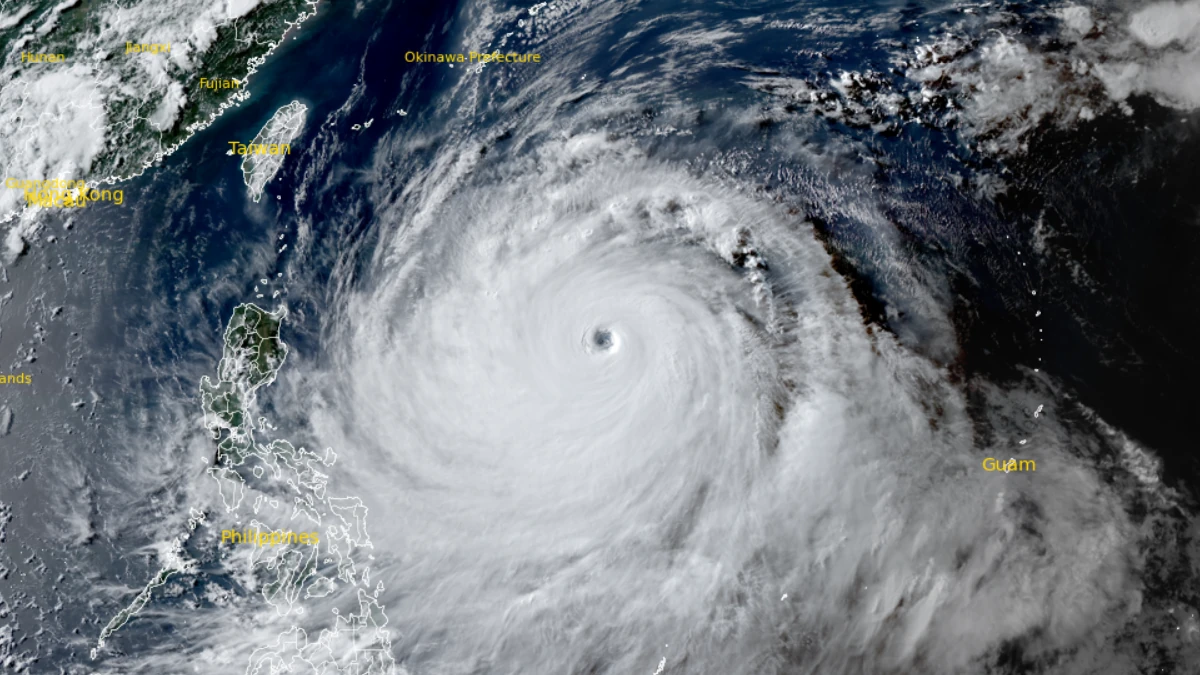
Travel across parts of East Asia is facing significant disruption as Super Typhoon Bavi moves steadily toward Taiwan and China’s eastern coast, prompting authorities to issue emergency warnings and airlines to adjust flight schedules ahead of the powerful storm’s expected landfall.
Weather agencies have warned that Bavi, with sustained winds approaching 200 km/h, could become one of the strongest typhoons to affect the region in recent years. Forecasts indicate that the storm is likely to approach northern Taiwan before making landfall along China’s Fujian or Zhejiang coast later this week.
Airlines have begun cancelling and rescheduling flights to and from major airports in Taiwan and eastern China, while passengers have been advised to monitor travel updates and check with their carriers before departing for the airport. Ferry services and some port operations have also been suspended as authorities prepare for rough seas and dangerous weather conditions.
Governments in Taiwan, China and Japan have urged residents to stock up on essential supplies and avoid unnecessary travel. Emergency response teams have been placed on standby, while local officials are reinforcing flood-control measures and preparing evacuation plans for communities located in low-lying and coastal areas. China’s emergency management authorities have already activated flood and typhoon response measures in Fujian and Zhejiang provinces as the storm approaches.
The typhoon arrives just days after severe weather linked to earlier storms caused widespread flooding in parts of southern China, placing additional pressure on emergency services and infrastructure. Meteorologists have warned that saturated ground could increase the risk of flash floods, landslides and power outages once Bavi reaches land.
Travel experts are advising tourists with plans to visit Taiwan, eastern China or nearby destinations over the coming days to remain flexible, review airline policies and consider postponing non-essential trips until weather conditions improve. Many carriers are expected to offer travel waivers or rebooking options for passengers affected by the storm.
As authorities continue to monitor Bavi’s path, millions of residents and travellers across the region are preparing for what forecasters describe as a potentially dangerous weather event with the capacity to disrupt transportation, tourism and daily life on a large scale.










+ There are no comments
Add yours