







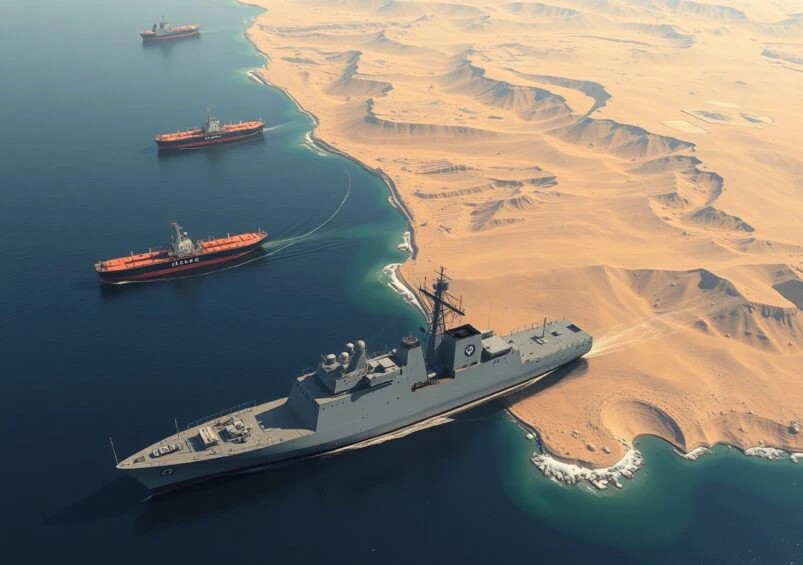
Rising tensions in the Strait of Hormuz have triggered serious global concern as relations between the United States and Iran continue to deteriorate. The situation is increasingly being viewed as a critical geopolitical flashpoint with the potential to disrupt global energy security and international trade.
The Strait of Hormuz, through which a large share of the world’s oil supply is transported, remains one of the most strategically important maritime routes on the planet. Any instability in this narrow passage immediately sends shockwaves through global oil markets, affecting prices, supply chains, and economic stability worldwide.
Recent reports suggest increased naval presence and heightened security alerts in the region. Shipping operators are reportedly reconsidering routes or delaying voyages due to rising uncertainty. These developments have intensified fears of supply disruptions and a possible spike in global fuel prices.
Diplomatic relations between Washington and Tehran remain deeply strained, with both sides holding firm positions on regional security and strategic influence. Despite ongoing international calls for de-escalation, no significant breakthrough has been achieved so far.
Analysts warn that continued instability in the region could have far-reaching consequences, not only for energy markets but also for global inflation, trade flows, and geopolitical alliances.
In summary, the escalating tensions in the Strait of Hormuz underline how fragile global stability can be when critical energy corridors come under pressure. The world now watches closely as the US–Iran standoff unfolds with potentially far-reaching consequences.










+ There are no comments
Add yours