







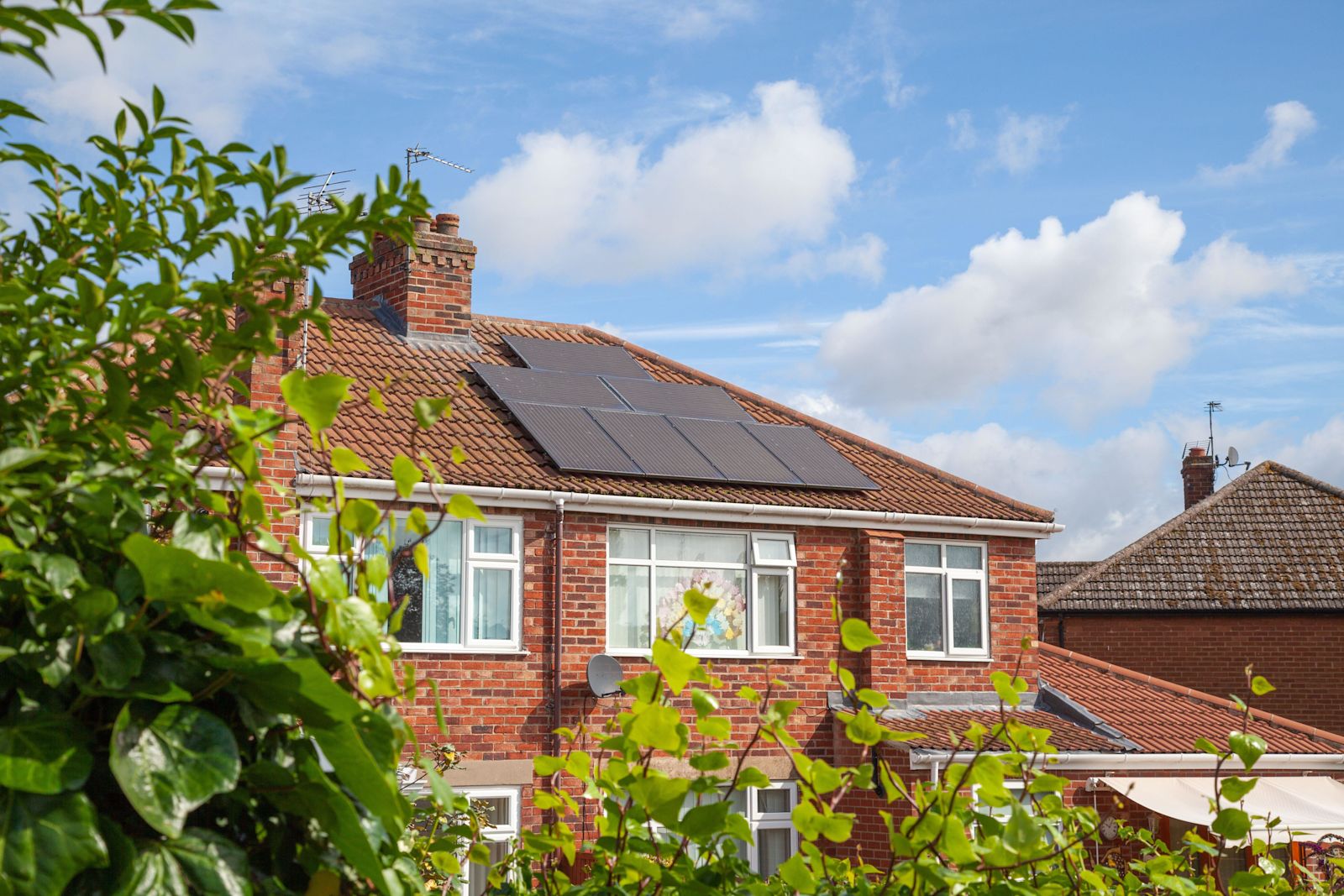
Britain is set to require solar panels and heat pumps in nearly all new homes, as the government moves to shield households from rising energy costs triggered by global instability and the ongoing Iran conflict.
The policy, part of the upcoming Future Homes Standard, will make low-carbon technology a default feature in new housing developments. Instead of traditional gas boilers, new homes will rely on electric heat pumps for heating, while rooftop solar panels will help generate electricity.
Officials say the move is aimed at reducing the country’s dependence on imported fossil fuels, which have become increasingly volatile due to tensions in the Middle East. Recent disruptions in global energy markets have pushed oil and gas prices higher, adding pressure on household energy bills across the UK.
By integrating renewable energy into homes, the government hopes to create a more resilient system that protects consumers from future price shocks. Households are also expected to benefit from lower energy bills, as solar panels reduce reliance on grid electricity and heat pumps offer more efficient heating.
The housing sector is a major contributor to the UK’s carbon emissions, and the new requirements are also expected to support the country’s long-term climate goals. Officials argue that building energy-efficient homes now will reduce costs and emissions in the future, while improving overall sustainability.
However, the plan has sparked debate among developers and industry groups. Some warn that the additional requirements could raise construction costs and slow the pace of housebuilding. Others argue that investing in energy-efficient homes will ultimately save money for both homeowners and the wider economy.
Energy analysts say the policy reflects a broader shift in strategy, linking housing development with energy security. As global tensions continue to affect fuel supplies and prices, governments are increasingly looking for ways to reduce exposure to external shocks.
With energy markets expected to remain uncertain, Britain’s push for solar-powered, low-carbon homes signals a decisive move toward greater self-reliance and long-term stability in the face of a changing global energy landscape.







+ There are no comments
Add yours