






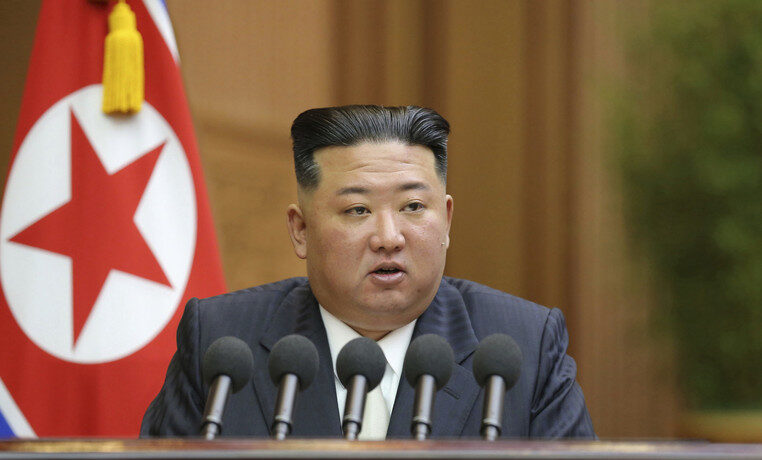
Kim Jong Un has reportedly authorized a military policy that could trigger an automatic nuclear strike if he is killed by a foreign adversary, according to recent international media reports. The development has raised serious concerns among global leaders and security analysts, who fear the policy could sharply increase tensions on the Korean Peninsula and beyond.
The reported strategy is believed to be part of North Korea’s broader effort to strengthen its nuclear deterrence and ensure retaliation even in the event of a leadership assassination. Analysts say the move reflects growing fears within Pyongyang about possible foreign military operations targeting the country’s leadership.
Under the reported policy, North Korea’s military command structure may have the authority to launch nuclear weapons automatically if evidence confirms the death of Kim Jong Un during an external attack. Experts warn that such a system significantly increases the risk of rapid escalation during any military conflict involving the isolated nation.
The announcement has sparked renewed debate over nuclear security and crisis management in East Asia. Neighboring countries, including South Korea and Japan, are closely monitoring the situation, while the United States has reiterated its commitment to regional defense and stability.
Security experts say automatic retaliation systems are particularly dangerous because they reduce the time available for diplomatic communication and verification during a crisis. Some analysts compared the policy to Cold War-era “dead hand” systems designed to guarantee retaliation after a nuclear strike.
North Korea has continued expanding its missile and nuclear programs despite international sanctions and repeated calls for denuclearization. In recent years, the country has conducted multiple missile tests and increased military rhetoric against what it describes as hostile foreign powers.
Global diplomats are now urging restraint and renewed dialogue to prevent further escalation. Many fear that heightened tensions could destabilize the region and trigger a new arms race in Asia.
The latest reports underline the growing uncertainty surrounding international security as nuclear powers continue modernizing their military capabilities. Observers believe the international community may now face renewed pressure to strengthen diplomatic engagement with North Korea in order to reduce the risks of confrontation and accidental conflict.






+ There are no comments
Add yours